
News
Carl Rogers: pioneer of the person-centered approach
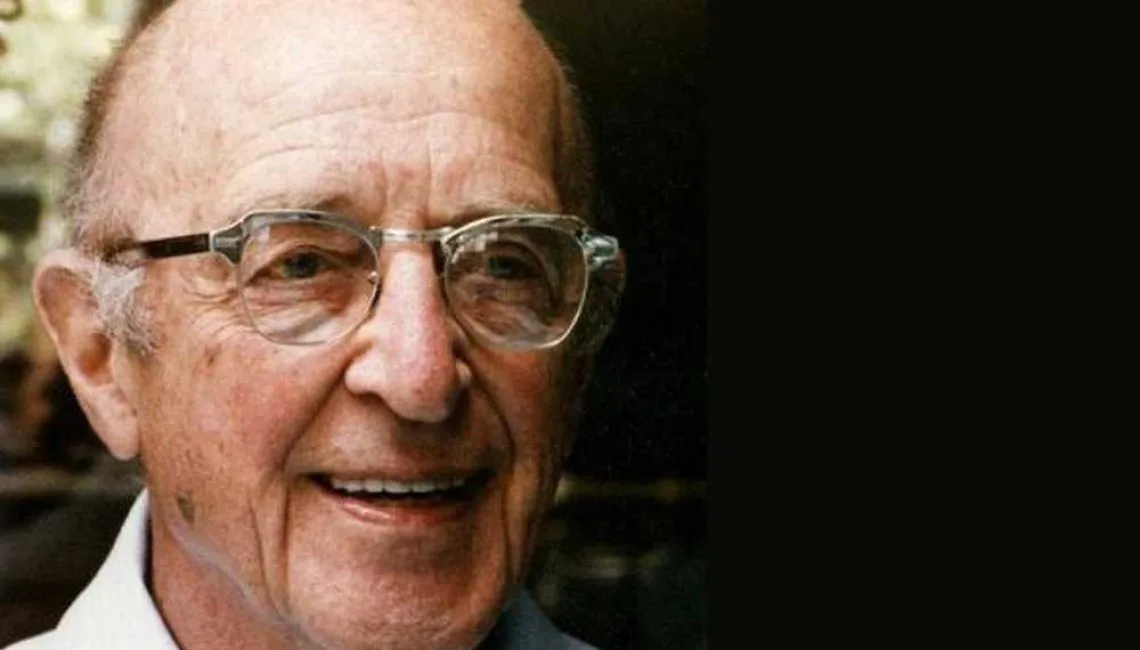
A key figure in twentieth-century psychology, Carl Rogers transformed the way we think about human relationships. An American psychologist with a distinctive career path, he explored what enables individuals to flourish, change, and grow. But who was Rogers really? And what exactly does this well-known “person-centered approach” entail? Let’s take a closer look.
Contents: everything you need to know about Carl Rogers
- Who was Carl Rogers?
- The person-centered approach
- The therapist’s core attitudes
- Rogers’ key concepts and theoretical contributions
- Applications of the Rogerian approach
- Rogers’ impact on modern psychology
- Criticisms and limitations of the Rogerian approach
- Legacy and contemporary relevance
Who was Carl Rogers?
Childhood, education, and early influences
Born on January 8, 1902, in Oak Park, a suburb of Chicago, Carl Ransom Rogers grew up in a Protestant family. This demanding environment fostered in him a strong need for independence and a deep reflection on personal freedom. After initially studying agronomy, he turned for a time toward theology before discovering psychology at the University of Chicago, where he undertook formal training in psychotherapy.
It was there that he came into contact with teachers and researchers who would have a lasting influence on his thinking. Intellectual debates about human nature nurtured his intuition: change does not arise from imposed knowledge, but from attentive listening and a trusting view of the person.
Professional path and break with dominant approaches
In the 1930s, Carl Rogers began his career as a clinical psychologist at the Rochester Society for the Prevention of Cruelty to Children, where he worked with families in distress. This field experience confronted him with human suffering and with the limitations of the dominant methods of the time, which were often rigid and directive.
At a time when Freudian psychoanalysis and behaviorism prevailed, Rogers gradually developed a therapy grounded in understanding.
The emergence of the humanistic approach
Throughout the 1940s and 1950s, Carl Rogers refined his vision of psychotherapy as centered on the person rather than on pathology. He moved away from authoritarian models, affirming that human beings naturally tend toward growth, autonomy, and self-realization, provided they benefit from a climate of listening and acceptance.
What is the Person-Centered Approach?
A humanistic and non-directive vision
When Carl Rogers first presented his method, he described it as “non-directive therapy.” The principle was simple but radical for its time: the therapist does not seek to interpret, diagnose, or influence, but rather to accompany the person in their own inner exploration.
Rogers assumed that every individual possesses an inherent capacity to guide their own development and resolve their difficulties, provided they are listened to with empathy.
The active role of the client in therapy
In the person-centered approach, Carl Rogers places the client—not the therapist—at the heart of the process. The therapist does not direct. Instead, they foster a climate in which the person can express themselves freely. The client thus becomes an active agent in their own change.
The self and the actualizing tendency
For Carl Rogers, every human being naturally strives toward self-realization. He called this inner force the actualizing tendency: a vital energy that drives individuals to grow, learn, and flourish.
The three fundamental attitudes of the therapist
Empathy
Empathy is the therapist’s ability to understand the client’s inner world as if it were their own, while never losing sight of the fact that it remains another person’s experience. It is not about sympathizing, but about accurately perceiving what the other is experiencing.
Congruence or authenticity
Congruence refers to the therapist’s inner coherence. They do not hide their emotions behind a rigid professional stance. To be congruent means to be authentic—aligned with what one feels and what one expresses.
Unconditional positive regard
Unconditional positive regard consists in accepting the person without judgment, regardless of their behaviors or difficulties.
Major concepts and theoretical contributions
The concept of the self and self-image
For Rogers, the self refers to the totality of perceptions an individual has about themselves (identity, values, and aspirations). This internal representation, shaped by experience and by others’ perceptions, constitutes the core of personality. When self-image aligns with lived experience, the person feels coherent and at peace with themselves.
Incongruence and psychological distress
Rogers uses the term incongruence to describe the gap between lived experience and self-image. The greater this gap, the more psychological distress develops: anxiety, blockages, and loss of meaning.
The process of change in psychotherapy
For Rogers, change does not come from transmitted knowledge but from a relational experience lived within a favorable climate. When the client feels understood and accepted, they can finally explore repressed emotions and adjust their self-image. Gradually, incongruence diminishes.
Applications of the Rogerian approach
Individual psychotherapy and helping relationships
In person-centered psychotherapy, the client is the agent of their own development. By adopting an empathic stance, the therapist creates a relational climate in which change becomes possible.
Group therapy and encounter groups
Rogers also developed group therapy, in which authentic communication fosters openness and personal growth. In these spaces, participants learn to listen and explore relational processes within a supportive environment.
Learner-centered education
In education, Carl Rogers advocated a humanistic pedagogy: the teacher becomes a facilitator, and the learner an active participant in their own learning. This learner-centered education values freedom and trust in human nature.
Rogers’ impact on modern psychology
Influence on humanistic and existential therapy
Alongside Abraham Maslow, Rogers became one of the founders of humanistic psychology, sometimes referred to as the “third force” after psychoanalysis and behaviorism. His person-centered approach influenced existential psychotherapy, counseling, and nonviolent communication.
Integration into contemporary approaches
Many modern models (integrative therapy and positive psychology) draw on Carl Rogers’ principles. The idea that the client is the expert on their own experience and that the therapeutic relationship is the primary tool for change is now widely recognized in clinical psychology.
Legacy and influenced disciplines
The spirit of the person-centered approach extends beyond therapy, influencing education, management, social work, and personal development.
Criticisms and limitations of the approach
Lack of structure according to some practitioners
The absence of formal techniques and directive frameworks has been criticized by some psychologists and therapists. They argue that the Rogerian method may lack structure, particularly in severe disorders requiring more active guidance. Rogers, however, defended this openness as a strength, believing that change arises from lived experience rather than from protocol.
Applicability to more severe disorders
The humanistic approach shows limitations when dealing with severe pathologies such as psychoses, addictions, and personality disorders, where non-directiveness may prove insufficient. Many practitioners today combine these principles with other approaches—particularly cognitive or systemic—for more comprehensive care.
Debates on scientific validation
Finally, scientific psychology has sometimes criticized Rogers for the lack of experimental proof supporting his model. His concepts are rooted more in clinical observation than in measurement. Nevertheless, psychotherapy research continues to confirm the central role of the therapeutic relationship in the change process—something Rogers had already established in the 1950s.
Legacy and contemporary relevance
An approach still used in psychotherapy
Rogers’ principles—especially empathy, congruence, and unconditional positive regard—remain central to contemporary psychotherapy. Whether in clinical interviews, counseling, or coaching, they emphasize that the therapeutic relationship is прежде all a space of mutual understanding.
Why Rogers remains essential today
By valuing the dignity and potential of every individual, Carl Rogers proposed a true philosophy of human relationships. His work continues to invite empathy and authenticity. His legacy reminds us that trusting a person is already a way of enabling them to change.